You profile has been submitted for review.



Yaseen khan IGCSE O/A LeveL chemistry and Biology Teacher
No reviews yet
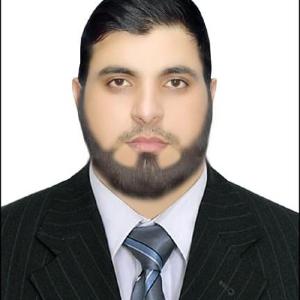
I focus not only on delivering subject knowledge, but also on improving students’ analytical thinking and exam techniques. I use student-centred and activity-based learning to keep lessons engaging and result-oriented. I am currently preparing to continue teaching under the British Curriculum at an international school in Iraq, where I aim to contribute to students’ academic success and personal development. Teaching is not just my profession, it is my passion and long-term career commitment.”
Subjects
-
Chemistry & Biology Grade 10-Grade 12
-
Anatomy and Physiology Intermediate-Expert
-
Anatomy & Physiology IGCSE-MPhil
-
B Pharmacy
-
Physiology & Cell biology Grade 10-Grade 12
Experience
-
Russia (Feb, 2024–Jul, 2025) at Modern international school Russia
“In my previous school, my role was not limited to teaching only; I was responsible for both academic delivery and student development. I taught Biology and Chemistry, prepared lesson plans aligned with the British curriculum, and designed assessments to check student progress. I also supported students in developing exam techniques, time management, and conceptual clarity.
In addition to classroom teaching, I played an active role in classroom management, parent communication, and academic counselling. I worked closely with other teachers to maintain a positive learning environment and ensure consistency in academic standards. Overall, my role focused on improving students’ learning outcomes while contributing to the school’s academic quality and culture.” -
Iraq (Jun, 2023–Jan, 2024) at British international school iraq
“In my previous school, my role was not limited to teaching only; I was responsible for both academic delivery and student development. I taught Biology and Chemistry, prepared lesson plans aligned with the British curriculum, and designed assessments to check student progress. I also supported students in developing exam techniques, time management, and conceptual clarity.
In addition to classroom teaching, I played an active role in classroom management, parent communication, and academic counselling. I worked closely with other teachers to maintain a positive learning environment and ensure consistency in academic standards. Overall, my role focused on improving students’ learning outcomes while contributing to the school’s academic quality and culture.” -
UAE (Jun, 2021–Jan, 2022) at Pak education acedmy UAE
“In my previous school, my role was not limited to teaching only; I was responsible for both academic delivery and student development. I taught Biology and Chemistry, prepared lesson plans aligned with the British curriculum, and designed assessments to check student progress. I also supported students in developing exam techniques, time management, and conceptual clarity.
In addition to classroom teaching, I played an active role in classroom management, parent communication, and academic counselling. I worked closely with other teachers to maintain a positive learning environment and ensure consistency in academic standards. Overall, my role focused on improving students’ learning outcomes while contributing to the school’s academic quality and culture.
Education
-
Master (Feb, 2016–Feb, 2020) from Hazra university–scored 3.44GPA
-
Biochemistry (Feb, 2016–Mar, 2020) from Hazra university Mansehra–scored 3.44GPA
-
M.phil biochemistry (Mar, 2015–May, 2020) from Hazrat university manshera–scored 3.77
Fee details
Rs1,000–1,200/month (US$3.59–4.31/month)
“My fee is flexible and depends on the student’s curriculum, grade level, number of weekly classes, and whether it is a private or group session. For regular long-term students, I also offer discounted packages. The goal is to provide quality teaching with a fee structure that is fair and suitable for both sides.”
Courses offered
-
Biology and chemistry
- Rs2500
- Duration: 40 days
-
 Delivery mode: Flexible as per the student
-
 Group size: 5
- Instruction language: Arabic, English, Urdu
-
 Certificate provided:
Yes
Certificate provided:
Yes
Don't miss this opportunity and join our session and take clear concept from our session.IGCSE BIOLOGY,A-level chemistry,IGCSE chemistry.
- US$200
- Duration: 50 Weeks
-
Delivery mode: Flexible as per the student
-
Group size: Individual
- Instruction language: English, Arabic
-
Certificate provided:
Yes
“This course introduces students to the fundamental principles of life sciences, including cell biology, genetics, ecology, human physiology, and plant science. It focuses on developing scientific inquiry skills, practical observation, and real-world application of biological concepts. The course prepares students for both theory and practical components of the IGCSE assessment.”
2. IGCSE Chemistry – Course Description
“This course covers the foundations of chemistry, including atomic structure, bonding, acids and bases, metals, periodic table trends, and reactions. It develops analytical thinking, experimental skills, and problem-solving required for IGCSE examinations. Students learn how chemistry is applied in industry, environment, and everyday life.”
3. A-Level Biology – Course Description
This advanced course explores biology in greater depth through molecular biology, enzymes, homeostasis, genetics, biotechnology, plant physiology, and evolution. It prepares students for higher education in medical, life science, and health-related fields. The course emphasizes critical thinking, experimental investigation, and scientific reasoning.”
4. A-Level Chemistry – Course Description
“This course provides an in-depth understanding of physical, organic, and inorganic chemistry. Students explore reaction mechanisms, energetics, chemical equilibrium, periodicity, and industrial chemistry. It focuses on developing strong conceptual knowledge, practical laboratory skills, and analytical reasoning needed for university-level science and engineering programs.”
5. General Science (Middle School) – Course Description
“This course builds foundational scientific knowledge by integrating basic concepts from biology, chemistry, and physics. It encourages curiosity, observation, and hands-on learning to help students understand the natural world and prepare for higher-level science studies.”

-
-
G-9/4 G 9/4 G-9, Islamabad, Islamabad Capital Territory, Pakistan
-
Can travel:
18.65 mi (30.0 km)
-
- Last login: May 24
- Registered: Jun 29, 2023
- Total Teaching exp: 5.0 yrs.
- Teaches online: Yes
- Online Teaching exp: 1.0 yrs.
- Teaches at student's home: Yes
- Homework Help: Yes
-
 Gender: Male
- Works as: Individual teacher
- Speaks: Arabic, English, Urdu
-
Fee:Rs1,000–1,200/month(USD 3.59–4.31/month)
Reviews
No reviews yet. Be the first one to review this tutor.