

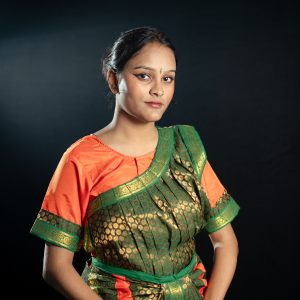
Akanksha gupta Kathak teacher
No reviews yet
Classical Approach:
Focus: This style emphasizes the traditional aspects of Kathak—its intricate footwork (tatkar), spins (chakkars), hand gestures (mudras), and storytelling (abhinaya).
Benefits: Students learn the classical foundations deeply, connecting with the heritage and discipline of Kathak.
Result: Students typically develop a strong technical foundation and a deeper appreciation for the classical style.
b) Interactive/Engagement-Based:
Focus: This approach prioritizes keeping the class engaging and fun while still focusing on technique. You might include storytelling, music, and a more playful environment.
Benefits: Helps students feel connected and motivated to keep learning, especially beginners and younger students.
Result: Students are more likely to stay engaged, enjoy learning, and may improve faster through a positive, dynamic atmosphere.
c) Performance-Oriented:
Focus: If you’re preparing students for performances, you may take a more structured, goal-oriented approach. Choreography, stage presence, and coordination are emphasized.
Benefits: Students who are interested in performance will appreciate this approach and will develop skills useful for recitals or competitions.
Result: Faster progress toward mastering specific pieces, better performance quality, and readiness for stage performances.
d) Individualized Approach:
Focus: This involves tailoring lessons to each student’s unique needs, strengths, and challenges. Some students may need more time on footwork, while others might focus more on grace or expression.
Benefits: Students feel more seen and supported, leading to better retention and improvement.
Result: A more personalized learning experience that accelerates each student’s development.
e) Hybrid Style:
Focus: Combining traditional techniques with modern or fusion elements (e.g., blending Kathak with contemporary dance or incorporating storytelling through new-age music).
Benefits: Keeps classes fresh and exciting, appealing to a wide range of students, especially younger audiences.
Result: Students develop a diverse skill set and the ability to adapt Kathak to different styles.
Results in Kathak Teaching:
Your results as a Kathak teacher will be measured by several factors, and they often depend on your teaching style. Some important results include:
Student Progress:
Technical Proficiency: The more structured and disciplined your teaching, the more quickly students will pick up on key techniques like tatkar (footwork), chakkars (turns), and mudras.
Artistic Expression: Encouraging students to explore abhinaya (expression) and storytelling will lead to more well-rounded dancers.
Choreographic Ability: As students progress, they’ll be able to learn and perform more complex choreography. Their ability to internalize patterns, rhythms, and compositions will improve.
Student Engagement and Retention:
Positive Learning Environment: If your teaching style is engaging and supportive, students will be more likely to attend regularly and enjoy the process.
Motivation: Offering constructive feedback, encouragement, and celebrating small milestones keeps students motivated.
Performance Success:
Public Performances: If you stage performances or recitals, results can be measured by how well your students perform on stage. This reflects not only their technique but their confidence and expressiveness.
Competitions/Exams: In many cases, Kathak students may participate in dance exams or competitions. Success in these can be a clear reflection of your teaching results.
Student Retention & Referrals:
Loyalty: Happy and successful students often stay for long-term classes and may refer friends and family. If your students feel they are progressing well and enjoying the classes, they’ll spread the word, which will build your reputation as a teacher.
Word of Mouth: Good results lead to more students seeking you out, especially if you’ve trained students who have gone on to achieve success in their own dance careers.
Patience and Consistency: Kathak is a traditional art form that requires patience, consistency, and a deep understanding of rhythm, grace, and technique. Effective teaching requires giving your students the time and guidance they need to master these skills.
Feedback and Adaptation: Pay attention to how students are progressing and adjust your teaching style based on their individual needs. Constructive feedback is key to their improvement.
Overall, your teaching style will be a blend of your experience, your understanding of Kathak, and the types of students you are working with. By being adaptable and results-driven, you’ll ensure that your students progress and that you build a solid teaching reputation.
Subjects
-
Kathak dance Beginner-Expert
-
Classical Kathak Dance Beginner-Expert
Experience
-
Kathak teacher (Mar, 2022–Mar, 2024) at ADA dance academy kanpur
Kathak Instructor (Teacher)
Teaching Techniques: Educate students about the basics of Kathak, including footwork, hand gestures, spins, and storytelling through dance.
Lesson Planning: Create structured lesson plans based on students' skill levels, ensuring that they progress gradually.
Individual Attention: Give personal feedback and guidance to help students refine their skills, improve posture, and express emotions through movement.
Cultural Education: Teach the historical and cultural context behind Kathak, including its origins, significance, and various gharanas (styles).
Performance Preparation: Train students for recitals or stage performances, helping them prepare choreography and practice synchrony.
Assessment: Evaluate student progress and provide constructive feedback.
Education
-
BA in classical dance kathak (Jan, 2012–Jul, 2020) from The music campus ( kanpur)
Fee details
₹1,000–1,500/hour (US$10.53–15.79/hour)
Individual Classes vs Group Classes:
For individual classes, ₹1500 per hour is a reasonable rate for a skilled and experienced teacher in many urban areas.
Class Frequency:
You might offer a discount for students who commit to multiple classes in a month or on long-term packages.
For example, ₹1500 per hour could be the rate for a single session, but you could provide a discounted rate for bulk bookings (e.g., 4 classes per month at ₹1400 per class).
Location:
In metro cities like Delhi, Mumbai, or Bengaluru, ₹1500 per hour could be quite standard or even on the lower side, given the demand for high-quality traditional dance instructors.
In smaller cities or towns, this might be considered a premium rate, and you could adjust accordingly.

-
-
Sector 126, Noida, Uttar Pradesh 201313, India
-
Can travel:
6.22 mi (10.0 km)
-
- Last login: Apr 10
- Registered: Feb 2, 2025
- Total Teaching exp: 2.0 yrs.
- Teaches online: Yes
- Online Teaching exp: 1.0 yrs.
- Teaches at student's home: Yes
- Homework Help: Yes
-
 Gender: Female
- Works as: Individual teacher
- Speaks: English
-
Fee:₹1,000–1,500/hour(USD 10.53–15.79/hour)
Reviews
No reviews yet. Be the first one to review this tutor.