You profile has been submitted for review.



Elpidia Juli SPSS
No reviews yet
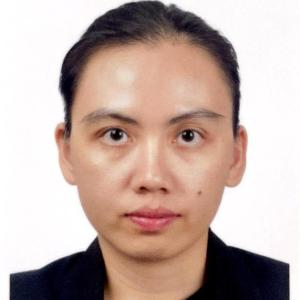
Struggling with numbers? Meet Dr. Elpidia Juli, a passionate educator with a PhD from Universiti Malaysia Sabah and over 4 years of proven teaching experience. Whether you are a primary student tackling fractions or a PhD candidate drowning in data, Dr. Elpidia makes the complex feel simple.
Why Choose Dr. Elpidia?
For University Students: Mastery in SPSS and complex data interpretation. If you need help with Structural Equation Modelling (SEM), ANOVA, or Coefficients, she doesn't just run the numbers—she helps you read them.
For School Students: Specialist in Mathematics and Additional Mathematics. She turns "math-phobia" into "math-confidence" for both primary and secondary levels.
Flexible Learning: Expert in both interactive Online sessions and focused Physical tutoring.
With an easy-going personality and a PhD-level understanding of logic, Dr. Elpidia is more than a tutor—she’s a mentor who truly cares about your breakthrough.
Subjects
-
English Beginner-Expert
-
Mathematics and Statistics Beginner-Expert
-
Additional Math Beginner-Intermediate
-
Additional Mathematics Beginner-Expert
-
Malay Language Expert
-
Analysis of variance (ANOVA) in SPSS Beginner-Expert
-
Data analysis using SPSS and Excel for a project Beginner-Expert
-
Structural equation modeling (SEM) through SPSS, AMOS, SmartPLS Beginner-Expert
Experience
-
Tutor (Jan, 2021–Feb, 2023) at My Tuition A+
Education
-
Social Sciences (Sociology and Social Anthropology) (Sep, 2021–Sep, 2025) from Universiti Malaysia Sabah
-
Master of Science Health and Social Care (Aug, 2020–Aug, 2021) from University of Edinburgh Napier
-
Bachelor of Science (Hons). Mathematics (Mar, 2014–Mar, 2016) from UNIVERSITI TEKNOLOGI MARA SHAH ALAM
Fee details
RM80–100/hour (US$20.15–25.19/hour)
Courses offered
-
Introduction to Statistical Analysis
- US$700
- Duration: 1 Month
-
 Delivery mode: Online
-
 Group size: Individual
- Instruction language: English
-
 Certificate provided:
Yes
Certificate provided:
Yes
1.1 Definition and Scope of Statistics
1.2 Importance of Statistical Analysis
1.3 Applications in Various Fields
1.4 Types of Statistics (Descriptive vs Inferential)
1.5 Role of Statistics in Research
Chapter 2: Types and Sources of Data
2.1 Qualitative vs Quantitative Data
2.2 Discrete vs Continuous Data
2.3 Levels of Measurement (Nominal, Ordinal, Interval, Ratio)
2.4 Primary vs Secondary Data
2.5 Methods of Data Collection
Chapter 3: Data Organization and Presentation
3.1 Classification and Tabulation
3.2 Frequency Distributions
3.3 Graphical Representation:
Bar Charts
Histograms
Pie Charts
Line Graphs
3.4 Data Visualization Principles
Chapter 4: Descriptive Statistics
4.1 Measures of Central Tendency:
Mean
Median
Mode
4.2 Measures of Dispersion:
Range
Variance
Standard Deviation
4.3 Shape of Distribution:
Skewness
Kurtosis
Chapter 5: Probability Theory
5.1 Basic Concepts of Probability
5.2 Rules of Probability
5.3 Conditional Probability
5.4 Probability Distributions:
Binomial Distribution
Normal Distribution
Poisson Distribution
Chapter 6: Sampling Techniques
6.1 Population vs Sample
6.2 Sampling Methods:
Random Sampling
Stratified Sampling
Systematic Sampling
Cluster Sampling
6.3 Sampling Errors and Bias
Chapter 7: Inferential Statistics
7.1 Estimation Techniques
7.2 Confidence Intervals
7.3 Hypothesis Testing:
Null and Alternative Hypotheses
Type I and Type II Errors
p-values
Chapter 8: Statistical Tests
8.1 t-test
8.2 Chi-square test
8.3 ANOVA (Analysis of Variance)
8.4 Non-parametric Tests
Chapter 9: Correlation and Regression
9.1 Correlation Analysis
9.2 Pearson vs Spearman Correlation
9.3 Simple Linear Regression
9.4 Multiple Regression
9.5 Interpretation of Results
Chapter 10: Data Analysis Using Software
10.1 Introduction to Statistical Software:
SPSS
R
Microsoft Excel
10.2 Data Entry and Cleaning
10.3 Running Basic Analyses
10.4 Interpreting Output
Chapter 11: Reporting Statistical Results
11.1 Writing Statistical Findings
11.2 Tables and Figures in Reports
11.3 APA/Academic Reporting Standards
11.4 Common Errors in Interpretation
Chapter 12: Ethical Considerations in Statistics
12.1 Data Integrity
12.2 Misuse of Statistics
12.3 Transparency and Reproducibility

-
-
Sepanggar, 88400 Kota Kinabalu, Sabah, Malaysia
-
Can travel:
0.62 mi (1.0 km)
-
- Last login: May 21
- Registered: Nov 10, 2024
- Total Teaching exp: 4.0 yrs.
- Teaches online: Yes
- Online Teaching exp: 4.0 yrs.
- Teaches at student's home: Yes
- Homework Help: Yes
-
 Gender: Female
- Works as: Individual teacher
- Speaks: Bahasa, English
-
Fee:RM80–100/hour(USD 20.15–25.19/hour)
Reviews
No reviews yet. Be the first one to review this tutor.