

Nicodemus Proffessor Chemistry, Mathematics, and Physics at both O Lev
No reviews yet
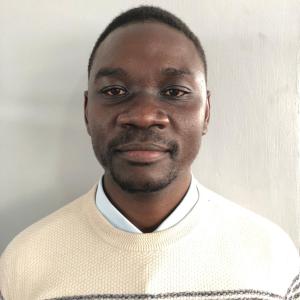
I am a passionate and results-driven educator with extensive experience teaching Chemistry, Mathematics, and Physics at both O Level and A Level. I specialize in delivering clear, engaging, and student-centered instruction that promotes deep understanding and academic excellence across the sciences.
With a strong foundation in multidisciplinary teaching, I integrate real-world applications and cross-subject connections to make complex concepts both accessible and meaningful. My approach adapts to diverse learning styles, helping students at all levels build confidence, master challenging material, and develop critical thinking skills.
I have successfully prepared learners for both national and international examinations, including IGCSE, A Level, and KCSE, through structured lessons, exam-focused strategies, and personalized academic support. My classroom is characterized by a positive, respectful, and motivating atmosphere, where learners feel supported to reach their highest potential.
Subjects
-
Statistics A Level
-
Economics & Accounting Expert
-
Chemistry, Mathematics, Physics Expert
Experience
-
TEACHING Chemistry, AND STATISTICS AD AND MECHANICS (Jan, 2022–Dec, 2024) at Treshaw International School, Nairobi
Teaching Roles – Chemistry, Statistics, and Mechanics (O Level & A Level)
As a skilled and versatile educator, I specialize in teaching Chemistry, Statistics, and Mechanics across both O Level and A Level. My approach focuses on delivering subject content with clarity, developing analytical thinking, and preparing students thoroughly for academic excellence and real-world application.
1. Curriculum Design and Instruction
Planning and delivering engaging, well-structured lessons aligned with international and national syllabi (e.g., IGCSE, Cambridge, Edexcel, and local curricula).
Teaching core and advanced topics in:
Chemistry: atomic structure, chemical bonding, energetics, kinetics, equilibrium, organic and inorganic chemistry.
Statistics: probability, data analysis, regression, distributions, hypothesis testing.
Mechanics: kinematics, forces, Newton’s laws, energy, momentum, and dynamics.
Using varied teaching strategies to meet the needs of diverse learners and promote deep understanding.
2. Interdisciplinary and Applied Learning
Integrating concepts across Chemistry, Statistics, and Mechanics to promote logical reasoning and real-world application.
Applying statistical techniques to analyze experimental data in Chemistry and to model physical systems in Mechanics.
3. Practical and Experimental Work
Conducting Chemistry practicals and Mechanics demonstrations to reinforce theory with hands-on experience.
Guiding students through data collection, analysis, interpretation, and reporting using statistical tools.
4. Assessment and Feedback
Designing and administering quizzes, assignments, lab reports, and examinations to evaluate student performance.
Offering detailed feedback, personalized academic support, and targeted revision to help students improve and excel.
5. Exam Preparation and Strategy
Preparing students for success in O Level and A Level exams by using past papers, mark schemes, and time management techniques.
Teaching effective problem-solving approaches for calculations, data interpretation, and theoretical analysis.
6. Use of Technology and Teaching Aids
Utilizing modern teaching tools such as simulations, data loggers, spreadsheets, and online platforms to enhance student engagement and comprehension.
Encouraging independent learning through the use of scientific calculators, virtual labs, and statistical software.
7. Classroom and Lab Management
Maintaining a safe, inclusive, and disciplined learning environment.
Supervising practical sessions to ensure proper use of chemicals, lab equipment, and measurement tools.
8. Professional Development
Continuously upgrading my subject knowledge and teaching methods by attending workshops, training, and collaborative learning with fellow educators.
Reflecting on classroom practice and incorporating student feedback to improve lesson delivery and outcomes. -
TEACHING Chemistry, AND STATISTICS AD AND MECHANICS (Jan, 2019–Aug, 2021) at Millennium Global International School
Teaching Roles – Chemistry, Statistics, and Mechanics (O Level & A Level)
As a skilled and versatile educator, I specialize in teaching Chemistry, Statistics, and Mechanics across both O Level and A Level. My approach focuses on delivering subject content with clarity, developing analytical thinking, and preparing students thoroughly for academic excellence and real-world application.
1. Curriculum Design and Instruction
Planning and delivering engaging, well-structured lessons aligned with international and national syllabi (e.g., IGCSE, Cambridge, Edexcel, and local curricula).
Teaching core and advanced topics in:
Chemistry: atomic structure, chemical bonding, energetics, kinetics, equilibrium, organic and inorganic chemistry.
Statistics: probability, data analysis, regression, distributions, hypothesis testing.
Mechanics: kinematics, forces, Newton’s laws, energy, momentum, and dynamics.
Using varied teaching strategies to meet the needs of diverse learners and promote deep understanding.
2. Interdisciplinary and Applied Learning
Integrating concepts across Chemistry, Statistics, and Mechanics to promote logical reasoning and real-world application.
Applying statistical techniques to analyze experimental data in Chemistry and to model physical systems in Mechanics.
3. Practical and Experimental Work
Conducting Chemistry practicals and Mechanics demonstrations to reinforce theory with hands-on experience.
Guiding students through data collection, analysis, interpretation, and reporting using statistical tools.
4. Assessment and Feedback
Designing and administering quizzes, assignments, lab reports, and examinations to evaluate student performance.
Offering detailed feedback, personalized academic support, and targeted revision to help students improve and excel.
5. Exam Preparation and Strategy
Preparing students for success in O Level and A Level exams by using past papers, mark schemes, and time management techniques.
Teaching effective problem-solving approaches for calculations, data interpretation, and theoretical analysis.
6. Use of Technology and Teaching Aids
Utilizing modern teaching tools such as simulations, data loggers, spreadsheets, and online platforms to enhance student engagement and comprehension.
Encouraging independent learning through the use of scientific calculators, virtual labs, and statistical software.
7. Classroom and Lab Management
Maintaining a safe, inclusive, and disciplined learning environment.
Supervising practical sessions to ensure proper use of chemicals, lab equipment, and measurement tools.
8. Professional Development
Continuously upgrading my subject knowledge and teaching methods by attending workshops, training, and collaborative learning with fellow educators.
Reflecting on classroom practice and incorporating student feedback to improve lesson delivery and outcomes. -
TEACHING PHYSICS AND MATHS,STATISTICS (Jan, 2016–Nov, 2018) at ACADELITE INTERNATIONAL SCOOL
Teaching Roles – Physics, Mathematics, and Statistics (O Level & A Level)
As a qualified and experienced teacher of Physics, Mathematics, and Statistics, I play a dynamic role in equipping students with the analytical, problem-solving, and scientific skills necessary for academic and real-world success. My responsibilities span both O Level and A Level, where I focus on building strong foundational knowledge and developing higher-order thinking skills.
1. Curriculum Planning and Delivery
Delivering comprehensive, well-structured lessons tailored to the requirements of O Level and A Level syllabi (e.g., IGCSE, Cambridge, Edexcel, national exams).
Teaching core concepts in Physics (e.g., mechanics, waves, electricity, thermal physics), Mathematics (e.g., algebra, calculus, geometry), and Statistics (e.g., probability, data handling, distributions) with clarity and depth.
Designing schemes of work and lesson plans that meet learning objectives while addressing diverse learning styles and abilities.
2. Subject Integration and Application
Emphasizing cross-disciplinary connections between Mathematics, Physics, and Statistics to deepen conceptual understanding and enhance real-world relevance.
Applying mathematical and statistical tools in solving physics problems and analyzing experimental data.
3. Assessment and Academic Support
Creating and administering regular assessments (quizzes, tests, assignments, and exams) to evaluate student progress.
Providing detailed feedback, personalized support, and remedial teaching for learners needing additional help.
Preparing students for both theoretical and practical components of final exams, including problem-solving strategies and data interpretation techniques.
4. Classroom and Laboratory Management
Maintaining a disciplined, respectful, and engaging classroom environment conducive to focused learning.
Conducting physics experiments and statistical investigations that foster scientific inquiry and analytical thinking.
Guiding students in handling lab equipment safely and interpreting results accurately using statistical methods.
5. Exam Preparation and Success Strategies
Preparing students rigorously for external exams using past papers, marking schemes, and timed practices.
Teaching students how to interpret and analyze data, construct logical mathematical arguments, and apply statistical models.
6. Technology Integration
Utilizing digital tools such as graphing software, simulations, spreadsheets (e.g., Excel), and statistical programs to enhance instruction and student engagement.
Encouraging students to use scientific calculators, online resources, and learning platforms for independent study and revision.
7. Continuous Improvement and Professional Growth
Keeping up-to-date with curriculum changes and new teaching strategies in STEM education.
Attending workshops, collaborating with fellow educators, and engaging in self-reflection to continuously enhance teaching effectiveness. -
TEACHING PHYSICS AND MATHS (Mar, 2014–Dec, 2016) at metrix tution centre
Teaching Roles – Physics and Mathematics (O Level & A Level)
As an experienced educator in Physics and Mathematics, I carry out a range of responsibilities to ensure students at both O Level and A Level achieve academic success and develop critical problem-solving skills. My roles include:
1. Lesson Planning and Delivery
Designing and delivering well-structured, engaging, and differentiated lessons aligned with curriculum standards (e.g., Cambridge, Edexcel, or national syllabi).
Introducing core concepts using real-world examples to help students grasp abstract ideas in both Physics and Mathematics.
Incorporating practical demonstrations and problem-solving exercises to deepen understanding and application.
2. Curriculum Coverage
Ensuring complete and thorough coverage of O Level and A Level syllabi, including advanced topics such as mechanics, electricity, calculus, vectors, and wave motion.
Structuring lessons to progressively build foundational knowledge at O Level and analytical skills at A Level.
3. Assessment and Evaluation
Preparing, administering, and grading formative and summative assessments to monitor student progress.
Providing constructive feedback and targeted support to help students improve their performance.
Preparing students for practical and theoretical exams through regular mock tests and revision sessions.
4. Classroom Management and Student Support
Creating a positive and inclusive classroom environment that fosters discipline, curiosity, and academic confidence.
Supporting students individually or in small groups to address learning gaps or extend their abilities.
5. Use of Technology and Resources
Integrating digital tools (e.g., simulations, graphing software, and virtual labs) to enhance student engagement and understanding.
Using visual aids, models, and interactive activities to support diverse learning needs.
6. Exam Preparation and Guidance
Guiding students through past papers, marking schemes, and exam strategies to build exam confidence.
Providing mentorship and academic counseling for students pursuing careers in STEM fields.
7. Professional Development
Staying updated with changes in curriculum and teaching strategies through ongoing training and professional collaboration.
Reflecting on teaching practices and incorporating feedback to continuously improve instructional effectiveness.
Education
-
bachelor of economics and statistics (May, 2016–Dec, 2021) from university of nairobi kenya
-
bachelor of science (May, 2012–Dec, 2015) from university of nairobi kenya–scored maths
Fee details
Br1,500–4,000/hour (US$9.49–25.32/hour)
Private Tutoring Rates – Chemistry, Physics, Mathematics, Statistics, and Mechanics
I offer high-quality private tutoring services in Chemistry, Physics, Mathematics, Statistics, and Mechanics for both O Level and A Level students. My lessons are customized based on the student's academic level, syllabus requirements, and individual needs. Fees vary depending on the level of study, location within Nairobi, and the scope and complexity of the content to be covered.
🔹 O Level (Form 1–4 / IGCSE / KCSE Equivalent)
Charges per hour: Between KES 1,500 to KES 2,500
Factors influencing the rate:
Student’s grade level and subject difficulty
Distance from my location (travel time and cost)
Frequency and duration of lessons
Whether the sessions are one-on-one or in small groups
🔹 A Level / Advanced Level (Form 5–6 / AS & A2 / Pre-University)
Charges per hour: Between KES 2,000 to KES 4,000
Rate depends on:
Depth and complexity of the topics (e.g., organic chemistry, calculus, advanced mechanics, statistical modeling)
Student’s academic goals (e.g., regular tuition, revision, or exam preparation)
Coverage required (e.g., full syllabus, selected topics, or intensive crash courses)
Location and travel time within Nairobi
🔹 General Fee Range
My overall service charges typically fall between KES 1,000 to KES 4,000 per hour, depending on the above factors.

-
-
South C, Nairobi, Kenya
-
Can travel:
248.6 mi (400.0 km)
-
- Last login: Dec 4, 2025
- Registered: Jul 30, 2025
- Total Teaching exp: 11.0 yrs.
- Teaches online: Yes
- Online Teaching exp: 3.0 yrs.
- Teaches at student's home: Yes
- Homework Help: Yes
-
 Gender: Male
- Works as: Individual teacher
- Speaks: English, Swahili
-
Fee:Br1,500–4,000/hour(USD 9.49–25.32/hour)
Reviews
No reviews yet. Be the first one to review this tutor.